



- Get directions
- Share
- Leave a review
- Claim listing
- prev
- next
Informació
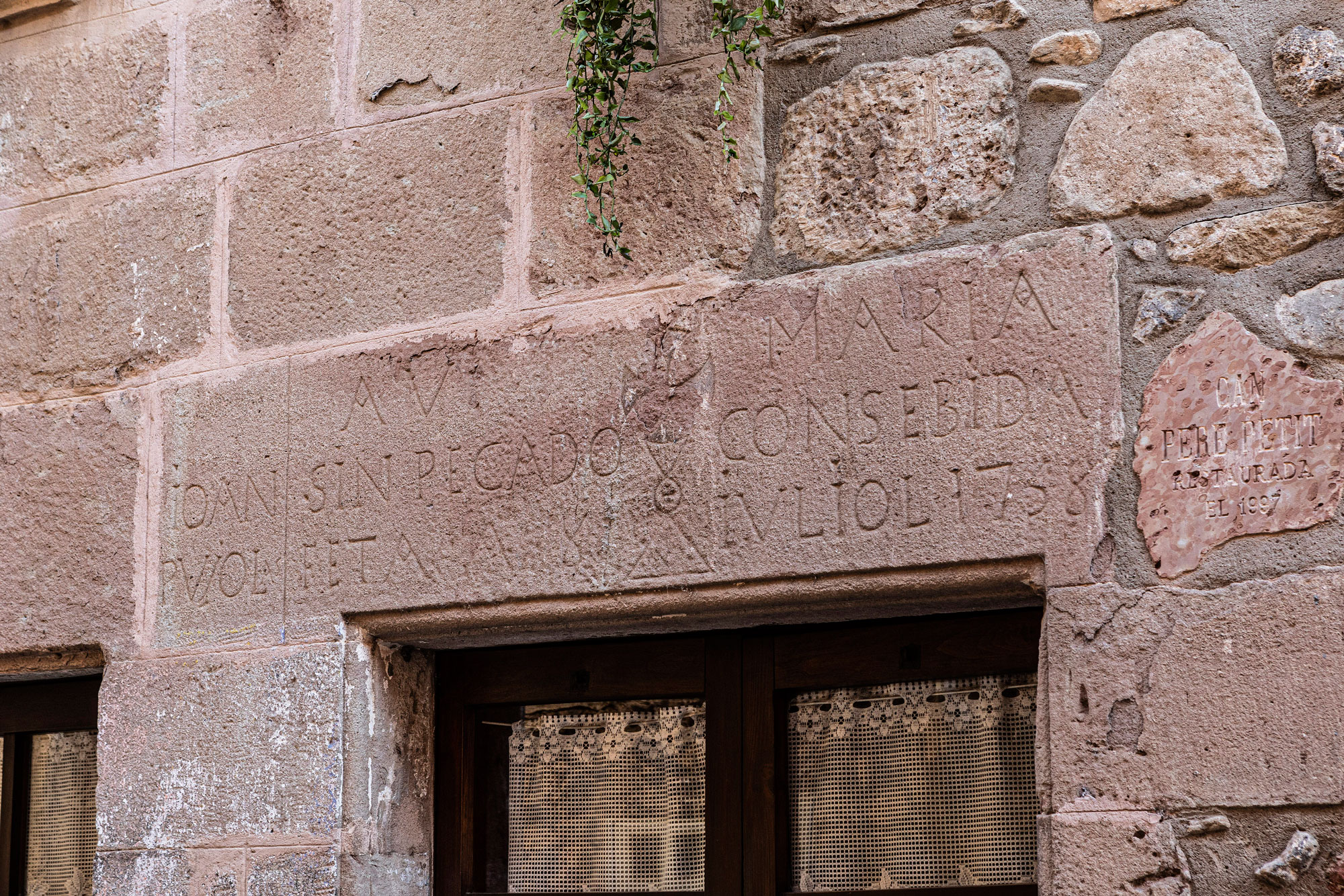
Symbolism
Date: June 1, 1761.
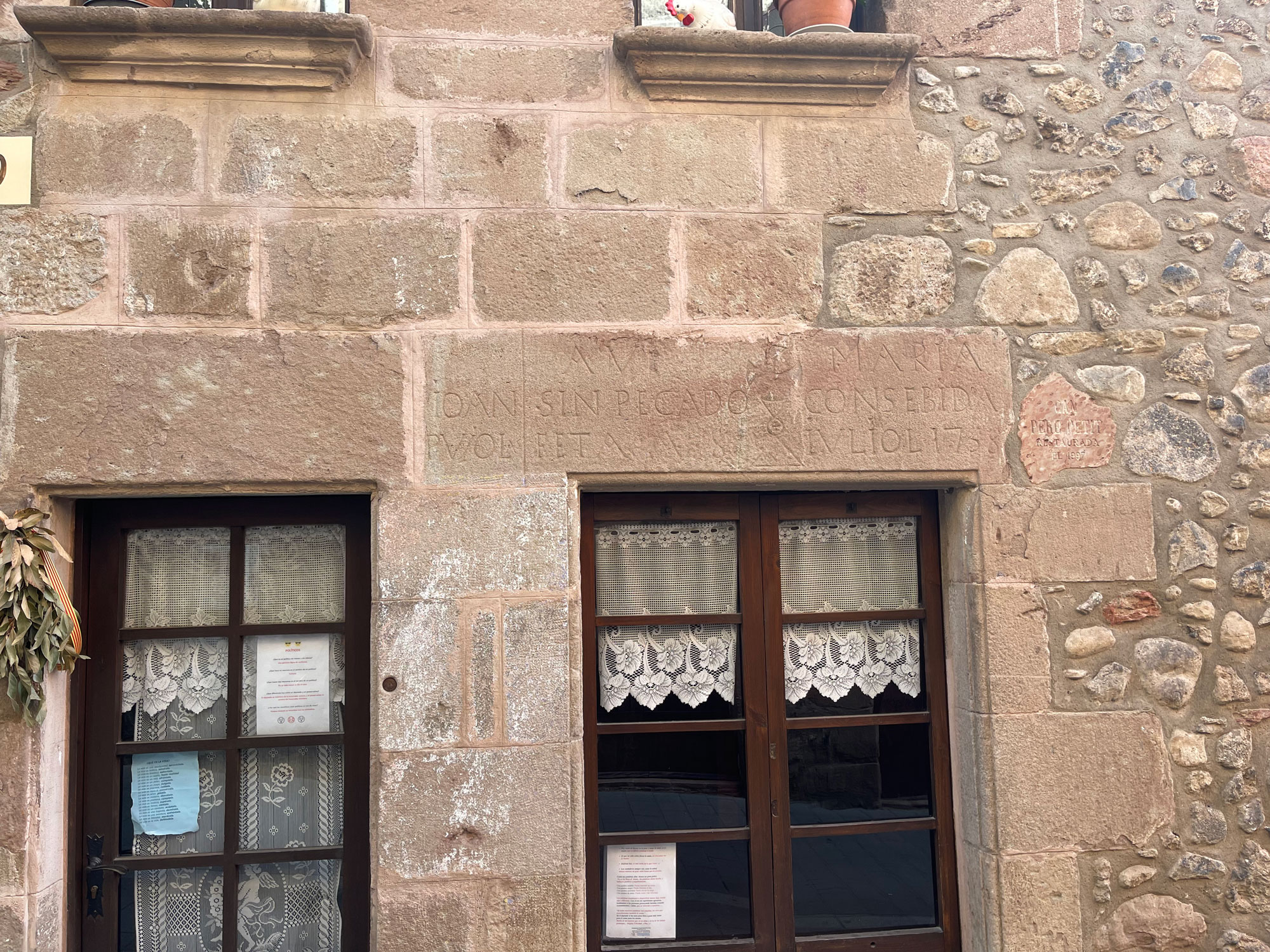
Inscription: "IOSEPH VALLANA/ DOMINVS INDICAT SVVS I DIEBVS IVNII I76I": Joseph Vallana, says his lord, June 1, 1761.
Symbolism: In the center, resembling a custodian, a four-armed cross rises with small bells, on a triangular base with floral ends.
Trade
The miller was the professional who processed the cereals harvested from fields and transformed them into flour. It involved grinding with much larger stones, the millstones, which had to be moved by animal traction, wind, or hydraulics. Flour was obtained from wheat, corn, and all kinds of cereals. But there were also paper mills, drapers, for sawing wood, or tanning hides. In a rural area like Santa Pau, the miller's figure was essential for the community, being a meeting point for many generations of residents of Santa Pau.
Biography
Josep Avellana was a miller, like his father. He was the son of Jacinto Avellana and Anna Pujolàs, born in Santa Pau in 1718. On February 21, 1751, he married Margarida Homs i Orts, daughter of Jeroni Homs, a miller from Montagut, and Francisca Orts. Thus, he became part of a family of millers who settled in the town of Santa Pau. On September 10, 1766, when the master of houses Benet Pujolàs sold him a property: "that house not entirely finished together with a garden at the back of said adjoining house, located in said town of Santa Pau and in the New Street of said town."
Galeria
Localització
-
Carrer del Pont, 9, Santa Pau, Espanya

